LUCKETT FARM GUIDE · NO. 2
North Devon, without the rush.
Best for: Beaches · Walking · Exmoor · Food · Villages · Nature
Stay for: 3–7 days
Our advice: Don’t over-plan
Last updated: October 2026
In this guide
1. Explore Exmoor National Park
2. Spend a day at Saunton Sands
5. Walk the beach at Woolacombe
8. Walk through the Valley of Rocks
13. Spend a morning in Appledore
14. Walk or cycle part of the Tarka Trail
17. Walk the South West Coast Path
18. Experience North Devon from the water
19. Go somewhere just for the food
How many days do you need in North Devon?
What are the best things to do in North Devon when it rains?
What are the best things to do with a dog?
Beaches, wild landscapes, pretty villages, coastal walks, great food and places you might otherwise miss — our guide to exploring North Devon from Luckett Farm.
North Devon is one of those places where the hardest part of planning a holiday can be deciding what to do first.
You can spend the morning walking across Exmoor, the afternoon beside the sea and the evening eating in a country pub. There are huge sandy beaches, dramatic cliffs, wooded river valleys, fishing villages, market towns, gardens, historic houses and miles of countryside to explore.
But you don't need to spend your holiday racing from one attraction to another.
At Luckett Farm, we think the best North Devon holidays leave room for spontaneity.
Pick one or two things each day. Take the scenic route. Stop somewhere that looks interesting. Have a long lunch. Go back to the beach for sunset.
Here are 20 of our favourite things to do in North Devon.
1. Explore Exmoor National Park
We have to start with Exmoor.
Exmoor combines wild open moorland with rivers, woodland, farmland, villages and dramatic coastline. Its walking routes range from accessible strolls to longer walks into wilder landscapes. Exmoor National Park walking guide
But you don't have to be a serious walker.
Drive across the moor. Find a village. Stop at a country pub. Look for Exmoor ponies. Walk beside a river.
Most importantly, don't rush it.
Luckett Farm says: Give Exmoor a full day rather than treating it as somewhere to drive through.
Read next: The Complete Guide to Exmoor National Park →
2. Spend a day at Saunton Sands
There are beaches — and then there's Saunton Sands.
The enormous sweep of sand makes Saunton feel wonderfully spacious, particularly once you walk away from the busier entrance.
It's a beach for walking, surfing, playing, sitting, thinking or simply doing very little.
Behind the beach are the remarkable dunes of Braunton Burrows, so you can combine beach and nature in the same visit.
This is somewhere we think works throughout the year.
A bright summer day is wonderful, obviously.
But so is a breezy autumn walk followed by somewhere warm for lunch.
Luckett Farm says: Don't feel you need perfect beach weather. Saunton is just as good for a long walk.
3. Walk around Baggy Point
If you're heading towards Croyde, make time for Baggy Point.
The National Trust's short circular route is approximately two miles, with coastal views, wildflowers and opportunities for birdwatching. National Trust
It's a good example of the kind of walk we like recommending to Luckett Farm guests: enough of a walk to feel you've earned lunch, without taking over the entire day.
And afterwards?
Head into Croyde.
4. Discover Croyde
Croyde is one of North Devon's best-known coastal villages.
The beach is particularly associated with surfing, but you don't have to get into a wetsuit to enjoy Croyde.
Explore the village, walk the beach, find somewhere for coffee or lunch and combine it with Baggy Point.
In summer there's a lively holiday atmosphere.
Outside the main season, Croyde feels different again — quieter and ideal for walking.
Luckett Farm says: Croyde + Baggy Point + lunch makes a very good North Devon day.
5. Walk the beach at Woolacombe
If you like enormous sandy beaches, Woolacombe should also be on your list.
It's one of North Devon's best-known seaside destinations and makes a great day out whether you want to surf, swim, walk or simply find a spot on the sand.
Don't assume you need to visit only in midsummer.
Some of our favourite North Devon beach days happen outside the traditional holiday season when the beaches are quieter and the coastline feels wilder.
Take a coat.
Take the dog where seasonal restrictions permit.
Walk.
Then find somewhere good to eat.
6. Explore Braunton Burrows
Immediately behind Saunton Sands is a completely different landscape.
Braunton Burrows is an extensive sand-dune system and one of the defining habitats of the North Devon UNESCO Biosphere. The Biosphere describes the area as part of an internationally important collection of ecosystems encompassing dunes, estuaries, coast, grasslands and marine habitats. North Devon UNESCO Biosphere UK
It's an excellent reminder that North Devon isn't just beautiful — it's environmentally important too.
This is somewhere for people who enjoy wildlife, landscapes and walking rather than conventional attractions.
Luckett Farm says: Combine Braunton Burrows and Saunton Sands for a day that gives you two completely different sides of North Devon.
7. Visit Lynton & Lynmouth
One sits above the other, but Lynton and Lynmouth are very different.
Lynmouth sits where wooded valleys descend towards the sea, while Lynton occupies the higher ground above.
Together they make one of our favourite areas for a day out.
Explore the villages, have lunch, walk along the coast and allow time to wander rather than simply ticking off attractions.
Then combine them with our next recommendation.
8. Walk through the Valley of Rocks
Close to Lynton lies one of North Devon's most dramatic landscapes.
The Valley of Rocks is known for its striking rock formations, coastal scenery and resident feral goats.
It's very photogenic, but don't just drive in, take a picture and leave.
Walk.
The combination of rock, sea and open landscape is what makes this part of North Devon so special.
Luckett Farm says: Valley of Rocks + Lynton + Lynmouth = one full day.
9. Walk to Heddon's Mouth
This is one for people who want to see the greener, wilder side of North Devon.
The National Trust's Heddon's Mouth circular walk follows the River Heddon through ancient woodland to where the valley reaches the sea. The route is approximately two miles. National Trust
The landscape feels quite different from the big beaches around Saunton and Woolacombe.
Woodland.
River.
Valley.
Sea.
Sometimes North Devon manages to give you all four at once.
10. Discover Watersmeet
Another lovely place to experience North Devon's wooded valleys is Watersmeet.
The area around the East Lyn River offers riverside walking through deeply wooded countryside. One National Trust circular route from Watersmeet to Ash Bridge is approximately 2.2 miles, with opportunities to see wildlife including herons and, with luck, otters. National Trust
This is particularly lovely when you want something different from the coast.
And on a hot summer day, woodland and running water have an appeal all their own.
11. Visit Tarr Steps
Technically we're heading onto Exmoor here, but North Devon and Exmoor are so closely connected that leaving Tarr Steps out would be ridiculous.
The ancient-looking stone clapper bridge crosses the River Barle in a beautiful wooded valley.
It's the combination of bridge, river and woodland that makes it special.
Take your time.
Walk beside the river.
And perhaps find a pub afterwards.
We've covered Tarr Steps in more detail in our Complete Guide to Exmoor National Park.
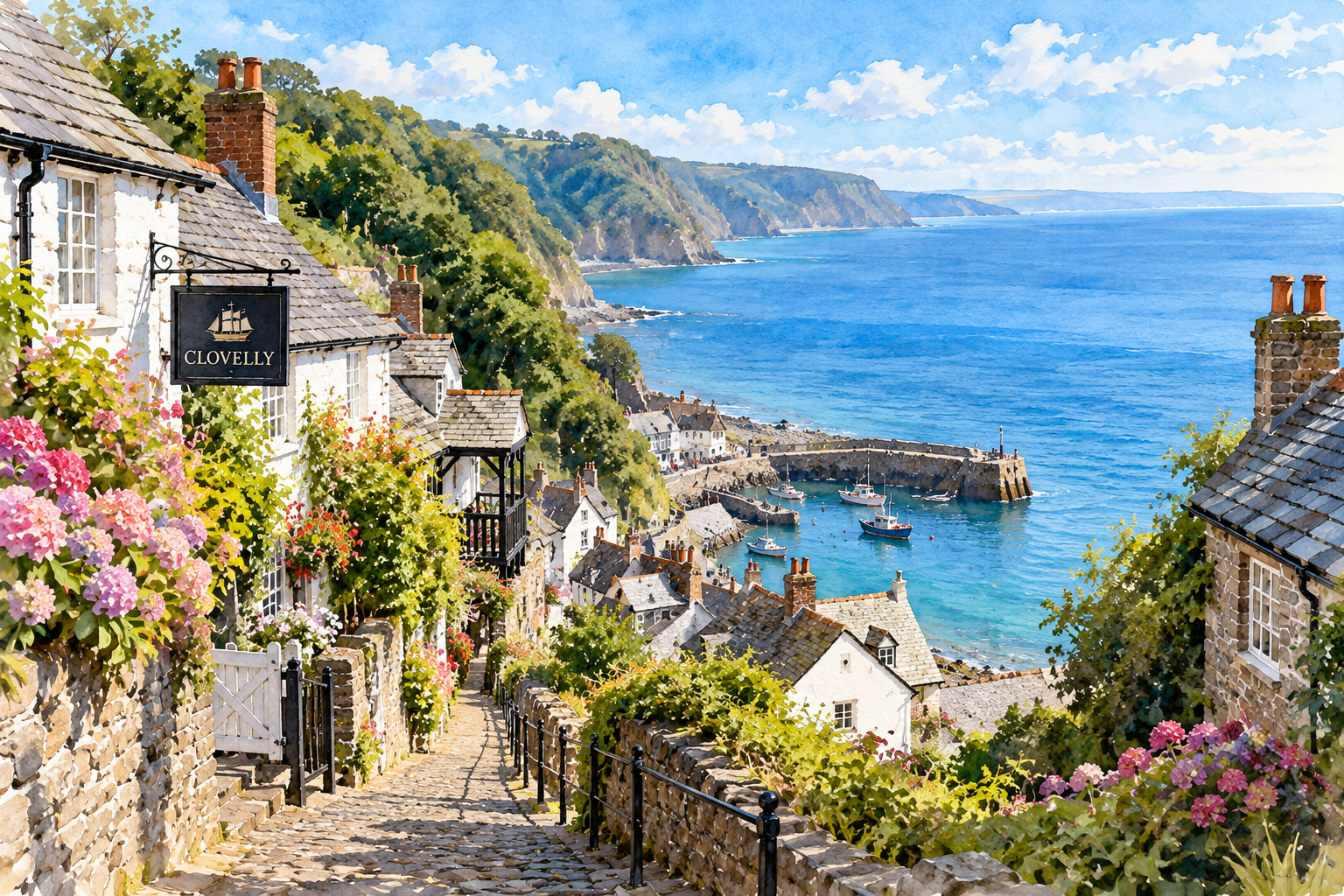
12. Explore Clovelly
Few North Devon villages are as instantly recognisable as Clovelly.
Its steep cobbled street descends through a historic village towards the harbour, with old cottages and views out to sea.
It's certainly one of the area's better-known visitor destinations, but it's also somewhere worth seeing at least once.
Wear sensible shoes.
This isn't the day for slippery soles.
Luckett Farm says: Take your time coming back up. There's no prize for doing it quickly.
13. Spend a morning in Appledore
For something gentler, try Appledore.
Sitting on the estuary, it has narrow streets, colourful houses, waterfront views and a very different character from North Devon's beach resorts.
It's somewhere we like for wandering rather than sightseeing.
Coffee.
A stroll.
A look around the independent shops and galleries.
Lunch.
That's enough.
And sometimes those are the best days.
14. Walk or cycle part of the Tarka Trail
North Devon is excellent cycling country, but you don't necessarily want every bike ride to involve climbing one of Devon's hills.
That's where the Tarka Trail comes in.
Following old railway routes and the estuaries of the Taw and Torridge in places, it provides a much gentler way of experiencing the landscape.
You can walk it too.
Don't worry about completing the whole thing.
Choose a section.
Stop for lunch.
Turn around.
We're noticing that lunch features quite heavily in this guide.
We make no apology for that.
15. Visit Arlington Court
If the weather isn't screaming beach, head somewhere completely different.
Arlington Court combines historic buildings, parkland, woodland and a large estate.
It's particularly good if you want to combine a cultural visit with a walk.
The National Trust maintains several routes here, including the 1.75-mile Old Lake Walk, the 2-mile Winford Valley Walk and longer routes through woodland and countryside where red deer may sometimes be seen. National Trust
This makes Arlington much more than simply visiting a house.
Luckett Farm says: Particularly good for a mixed-weather day.
16. Visit RHS Garden Rosemoor
Garden lovers should make time for RHS Garden Rosemoor, near Great Torrington.
It's the kind of place that changes constantly through the seasons, so a spring visit feels quite different from autumn.
And even if you aren't somebody who normally plans holidays around gardens, it's a relaxing contrast to beaches and moorland.
Take your time.
Have lunch.
Wander.
It's that sort of place.
17. Walk the South West Coast Path
You don't need to walk the whole South West Coast Path.
In fact, we strongly recommend that you don't attempt it during a week's holiday at Luckett Farm.
Pick a section instead.
North Devon has some magnificent coastal walking, from relatively gentle routes to demanding cliff-top sections.
Baggy Point is an easy introduction, while walks around Heddon Valley and Morte Point provide more dramatic terrain. The National Trust highlights a range of North Devon coastal routes, including Baggy Point, Heddon's Mouth, Morte Point and East Titchberry near Hartland. National Trust
We'll eventually create a separate guide:
The Best Coastal Walks in North Devon.
18. Experience North Devon from the water
You don't always have to look at the coast from the land.
North Devon's beaches and coastline offer plenty of opportunities to get onto the water.
Depending on where you go and your experience, that might mean:
Surfing.
Stand-up paddleboarding.
Kayaking.
Swimming.
Or taking a lesson rather than pretending you know what you're doing.
Croyde and Saunton are particularly associated with surfing and other water-based activities.
If you've never surfed before, North Devon is a pretty good place to change that.
And if surfing sounds exhausting, sitting on the beach watching everybody else do it is also perfectly acceptable.
19. Go somewhere just for the food
Not every North Devon day needs an attraction attached to it.
Sometimes the destination should simply be lunch.
One of the things we want the new Luckett Farm Guide to do particularly well is food.
Not generic lists copied from review websites.
Places we genuinely think are worth visiting.
Country pubs.
Sunday lunches.
Seafood.
Farm shops.
Restaurants.
Cafés.
Places with great gardens.
Places with fires.
Places worth driving an hour for.
We're going to create a dedicated Eat & Drink section within the Luckett Farm Guide and keep it updated because restaurants and opening arrangements change far more frequently than landscapes do.
20. Do absolutely nothing
We're serious.
You don't have to spend every day of your holiday doing North Devon.
Sometimes the best thing you can do is stay at Luckett Farm.
Have breakfast outside.
Read.
Walk around the farm.
Sit by the fire.
Open some wine.
Cook something good.
Get into the hot tub.
Watch the weather move across the fields.
Listen to the birds.
Go back to bed.
One of the reasons people escape to the countryside is to have time to do very little.
Don't feel guilty about using it.
How many days do you need in North Devon?
You can see a surprising amount in a weekend, but we'd suggest at least three or four days if you want to experience both the coast and countryside without rushing.
A week gives you far more freedom.
You might divide it something like this:
Day 1 — Exmoor
Walk, village and country pub.
Day 2 — Saunton & Croyde
Beach, Baggy Point and lunch.
Day 3 — Lynton & Lynmouth
Valley of Rocks and Exmoor coast.
Day 4 — Slow day
Luckett Farm, local walk and dinner.
Day 5 — Woolacombe
Beach and coastal walk.
Day 6 — Tarr Steps
Woodland, river and pub.
Day 7 — Decide on the day
Go back to your favourite place or discover somewhere completely new.
And don't follow the itinerary religiously.
North Devon is better when you leave some room for the weather.
What are the best things to do in North Devon when it rains?
Rain doesn't necessarily ruin a North Devon day.
It just changes it.
Try Arlington Court or RHS Rosemoor between showers. Explore Appledore. Find a long lunch. Visit a local market town. Take a woodland walk where the trees provide some shelter.
Or return to Luckett Farm and put the fire on.
We'll be creating a dedicated guide:
20 Things to Do in North Devon When It Rains.
Because we're in Devon.
It seemed sensible.
What are the best things to do with a dog?
North Devon is particularly rewarding with a dog because so much of the experience is outdoors.
Beaches, woodland, Exmoor, coastal paths and countryside walks give you plenty of choice, although seasonal beach restrictions, livestock and local access rules need to be checked.
We're putting together a dedicated:
Dog-Friendly North Devon Guide
covering beaches, walks, pubs, places to eat and days out.
What shouldn't I miss in North Devon?
If this is your first visit and you only have a few days, our shortlist would be:
Exmoor National Park
Saunton Sands
Croyde & Baggy Point
Lynton, Lynmouth & Valley of Rocks
Tarr Steps
Then leave enough time to find something we haven't told you about.
That's often where the best memories come from.
Explore North Devon from Luckett Farm
Luckett Farm sits in the North Devon countryside, giving you a base from which to experience two very different sides of the area.
Head one way and you're exploring Exmoor, woodland, rivers and villages.
Head another and you're discovering beaches, surf, cliffs and the North Devon coast.
Then come home.
Our four places to stay each offer something different.
The Lost Cabin — a secluded cabin beside the woods.
Hawkings Hideaway — a countryside hideaway for two.
Keepers Lodge — contemporary living within an old Devon longhouse.
Tumbledown Barn — a place for family and friends to get together.
You don't need to see everything.
Just choose somewhere that makes you want to stay a little longer.